
Clearing Hazardous Trees Before Property Damage Occurs
Tree removal in West Milford for dead, diseased, or storm-compromised trees threatening homes and utilities
A tree leaning toward your roofline after storm damage requires immediate attention before the next weather event pushes it over. Bloom Tree Care LLC removes hazardous, dead, and diseased trees from residential properties across West Milford, where dense lot development places homes, power lines, and neighboring structures within falling distance of compromised trees. The crew stages equipment to handle complex removals on compact residential lots, working around driveways, landscaping, and property lines that leave minimal clearance for traditional felling methods.
Full tree takedown involves rigging sections from the top down when clearance doesn't allow directional felling, lowering cut pieces with ropes to prevent damage to surrounding structures. Storm damage and natural decline create hazard trees—those with dead tops, hollow trunks, root heave, or lean angles that indicate structural failure. Debris is hauled from the site, and stump removal can be coordinated to complete the job in one mobilization.
Schedule a property evaluation to identify trees showing signs of structural compromise or disease progression.
What Proper Removal Requires in Dense Residential Areas
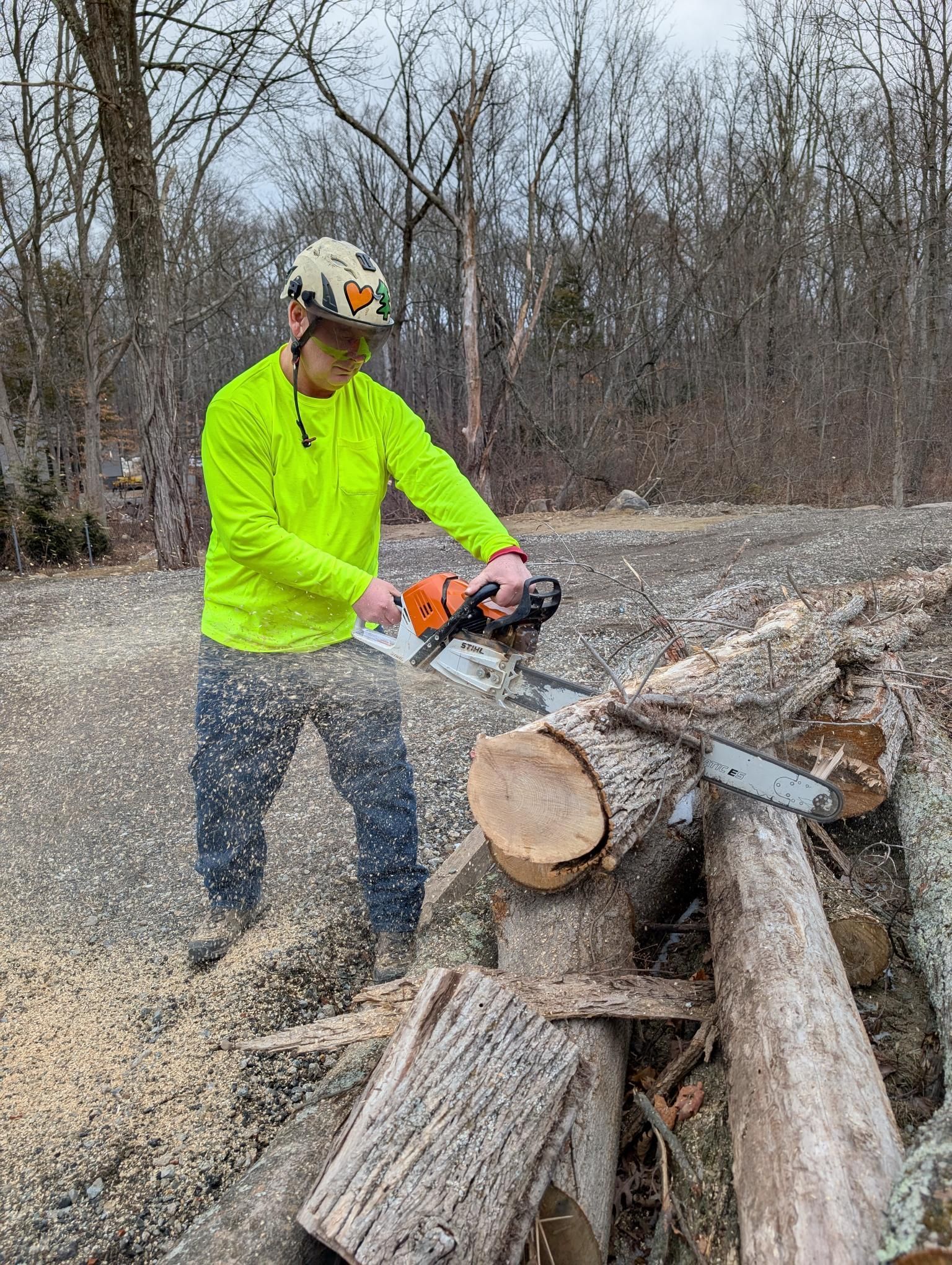
Residential tree removal in North Jersey requires precision staging because most properties lack the open space to drop a full tree in one piece. Our crew assesses fall zones, identifies rigging anchor points in the canopy, and sections the tree from the crown downward, controlling each piece with ropes to avoid contact with structures, utility lines, and landscaping below. Equipment is positioned to minimize lawn damage while providing access for debris removal.
Once the tree is down, you'll notice the immediate elimination of the hazard—no more widow-makers hanging in the canopy, no trunk leaning toward the house during high winds, and no root plate heaving out of the ground after heavy rain saturates the soil. The lot is cleared of all wood debris, leaving only the stump unless grinding is added to the scope.
Removal addresses the tree itself but does not include landscape restoration, grading corrections where roots have lifted soil, or utility line repairs if contact occurred during failure. Stump grinding is a separate process that takes the remaining wood below grade, allowing replanting or lawn restoration over the area.
What Property Owners Usually Ask
Homeowners in West Milford and surrounding North Jersey communities often have similar concerns before scheduling removal work.
What happens if the tree is near power lines?
Crews coordinate with utility providers when trees are entangled with live wires, but homeowners should report downed lines to the utility company immediately before any work begins.
How is the tree brought down safely on a small lot?
Rigging techniques allow the crew to section the tree into manageable pieces and lower each one with ropes, preventing uncontrolled falls that could damage structures or landscaping within a few feet of the trunk.
When should a tree be removed instead of pruned?
Trees with more than 50 percent dead canopy, hollow trunks, significant root decay, or severe lean toward structures are typically candidates for removal rather than corrective pruning.
What does the crew do with the wood and debris?
All cut material is hauled from the site unless you request log sections for firewood, in which case larger trunk pieces can be left stacked in a designated area.
How long does a typical residential removal take?
Single-tree removals on accessible properties are often completed in a few hours, while multi-tree jobs or removals requiring extensive rigging may take a full day depending on tree size and site constraints.
Bloom Tree Care LLC handles hazard tree removal across residential properties where storm damage or natural decline has created unsafe conditions. Arrange an on-site consultation to assess tree structure, rigging requirements, and debris removal logistics specific to your property layout.